Category: public

StageMatch sur mobile : trouvez sonorisation, éclairage et vidéo de scèneStageMatch sur mobile : trouvez sonorisation, éclairage et vidéo de scène


Pour équiper une scène, une salle ou une tournée, il faut souvent réunir sonorisation, éclairage, vidéo et matériel de structure sans perdre de temps. StageMatch permet aux professionnels de parcourir sur mobile des annonces d’équipement scénique professionnel d’occasion, tandis que voir le site présente une sélection qui facilite la comparaison des informations utiles avant de contacter un vendeur. Une recherche bien préparée aide à repérer le matériel adapté, à vérifier son état et à anticiper son transport. Voici comment organiser cette démarche pour sélectionner des équipements cohérents avec vos besoins techniques et votre budget.
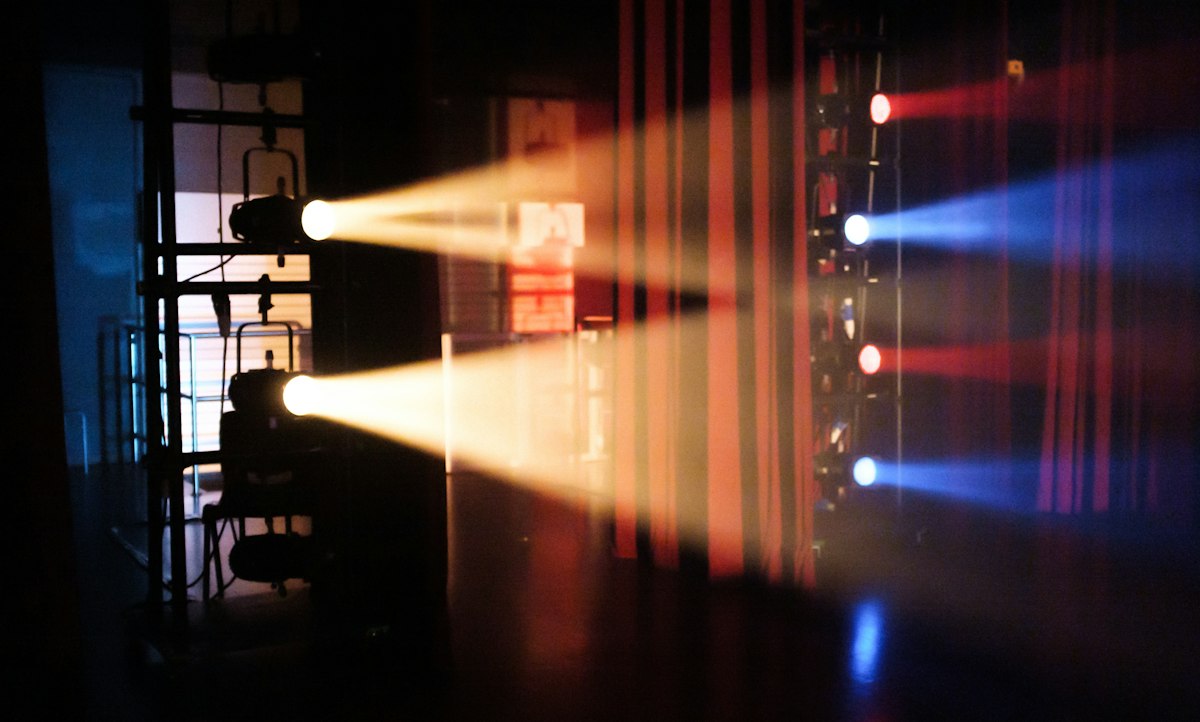
Repérer rapidement le matériel scénique sur StageMatch

La recherche mobile est particulièrement utile lorsqu’un besoin apparaît en préparation de spectacle, de prestation ou de renouvellement de parc. Depuis un téléphone, un responsable technique peut consulter les catégories disponibles, examiner les descriptions et mettre en regard plusieurs offres, sans devoir attendre de retrouver son poste de travail. Sur une place de marché interentreprises consacrée au matériel de scène, les annonces peuvent concerner l’audio professionnel, l’éclairage, la vidéo, les structures scéniques, les caisses de transport ou encore les équipements de communication et de réseau.

Le premier réflexe consiste à partir de l’usage plutôt que d’un modèle précis. Pour une sonorisation, définissez la couverture attendue, le format du lieu et les contraintes de puissance. Pour l’éclairage, clarifiez les effets recherchés, les modes de commande et les possibilités d’accroche. Pour la vidéo, établissez les besoins de diffusion, de connectique et de résolution. Cette méthode évite de se laisser guider uniquement par le prix ou la marque : elle permet de vérifier si le matériel proposé répond réellement au cahier des charges de la production.

Commencer une recherche mobile étape par étape

Une consultation efficace se prépare en quelques minutes. Notez les exigences indispensables, puis parcourez les annonces en gardant à l’esprit les contraintes de compatibilité, de disponibilité et de manutention. Les fiches doivent être lues attentivement : l’état annoncé, la quantité, les accessoires inclus et les informations d’expédition peuvent changer l’intérêt réel d’une offre. Utilisez les étapes ci-dessous pour faire progresser la recherche depuis le besoin initial jusqu’à une décision d’achat documentée.

  1. Définir l’application : précisez le type de spectacle, la taille du public, le lieu et la fonction que le matériel doit remplir.
  2. Choisir la famille d’équipement : recherchez séparément la sonorisation, l’éclairage, la vidéo ou les éléments de scène afin de comparer des articles de même usage.
  3. Filtrer les annonces : examinez le prix, l’état, la quantité disponible, les accessoires et les modalités de retrait ou de transport.
  4. Vérifier la compatibilité : confrontez les caractéristiques de l’article à votre parc existant, à vos raccordements et à vos moyens de commande.
  5. Échanger avant de décider : demandez les précisions techniques manquantes et confirmez l’état, le contenu de la vente et les conditions logistiques.
  • Une recherche par usage rend les résultats plus pertinents.
  • La comparaison des annonces aide à évaluer le rapport entre prix et état.
  • La vérification des accessoires réduit les achats complémentaires imprévus.
  • Une préparation logistique facilite la réception et la mise en service.

Comparer concrètement sonorisation, éclairage et vidéo

Au milieu du processus, la comparaison doit porter sur des critères mesurables et sur les besoins de l’équipe qui exploitera le matériel. Dans la sonorisation, vérifiez les connexions, la configuration du système, l’entretien connu et les éléments fournis. Une annonce peut, par exemple, proposer deux caissons de basses Martin Audio S218 Blackline d’occasion, en bon état, au prix indiqué de 850 €. Une console numérique Yamaha CL5 d’occasion, également annoncée en bon état, peut intéresser une régie, mais son intégration dépendra notamment du parc audio et du flux de travail déjà en place.

  • Audio : contrôlez la configuration, les entrées et sorties, les accessoires et l’état des composants.
  • Éclairage : confirmez les modes de commande, les câbles, les systèmes d’accroche et les besoins électriques.
  • Vidéo : vérifiez les formats acceptés, les connecteurs, la chaîne de diffusion et les accessoires inclus.
  • Structure et transport : estimez le poids, l’encombrement, les caisses nécessaires et les conditions de manutention.

Les écarts entre annonces ne se résument pas à leur montant. Il faut aussi considérer les conséquences d’un état déclaré moyen ou bon, le coût d’un contrôle technique et l’éventuelle nécessité de remplacer des pièces. Pour la vidéo, demandez des renseignements précis sur les entrées, sorties et accessoires, car une unité isolée peut ne pas suffire à compléter une chaîne de diffusion. Pour l’éclairage et la structure, vérifiez les exigences de sécurité et les modalités d’installation. Un matériel d’occasion bien choisi peut renforcer un parc existant, à condition d’anticiper ces vérifications avant l’achat.

Les avantages d’une place de marché spécialisée

Une plateforme consacrée aux équipements de scène rassemble des catégories que les équipes techniques doivent souvent coordonner. Cela rend possible une recherche plus globale : trouver un élément audio, puis examiner les besoins connexes en transport, en communication ou en réseau. Pour les entreprises de spectacle, les prestataires et les salles, cette vue d’ensemble peut simplifier le renouvellement d’un parc ou la préparation d’un projet. Elle n’élimine pas le travail de validation, mais aide à repérer des offres qui méritent un examen approfondi.

  • Choix transversal : accès à des annonces de sonorisation, d’éclairage, de vidéo et de matériel scénique.
  • Recherche professionnelle : environnement orienté vers les besoins des entreprises et des techniciens.
  • Équipement d’occasion : possibilité d’étudier des solutions adaptées à un budget défini.
  • Logistique prise en compte : catégories consacrées aux caisses, au transport et aux équipements complémentaires.

La spécialisation facilite également le repérage d’éléments moins visibles dans une liste d’équipements : pièces détachées, accessoires, solutions de communication ou matériel informatique et réseau lié à l’exploitation scénique. Une annonce de pièces de rechange Digidesign D-Show, par exemple, peut répondre à un besoin de maintenance ciblé, tandis que des enceintes Meyer Sound MSL4 annoncées d’occasion et en état moyen demanderont une évaluation particulièrement attentive. Dans chaque cas, la description de l’annonce doit servir de point de départ à une vérification, et non de substitut à un échange technique.

Vérifier l’état, la compatibilité et la transaction

L’achat d’équipement scénique professionnel d’occasion exige de distinguer les informations confirmées de celles qui restent à éclaircir. Une mention telle que « bon état » donne une indication, mais ne précise pas à elle seule l’historique d’utilisation, les contrôles récents ou les défauts éventuels. Demandez des détails concrets : fonctionnement de chaque entrée et sortie, traces d’usure, réparations, éléments manquants et conditions de test. Pour un équipement coûteux ou essentiel à une représentation, il est prudent de prévoir une inspection ou une démonstration, lorsque cela est possible, avant de finaliser la transaction.

La sécurité passe aussi par la compatibilité et la logistique. Confirmez que l’équipement peut être raccordé au système existant et que les accessoires nécessaires sont disponibles. Pour les éléments lourds ou fragiles, clarifiez l’emballage, le chargement, l’assurance de transport et la responsabilité en cas de dommage. Les caisses de transport adaptées protègent le matériel pendant les déplacements, mais leur format doit correspondre exactement aux appareils. Enfin, conservez les échanges et les informations de vente utiles à votre suivi d’inventaire et à la maintenance. Une décision méthodique limite les mauvaises surprises et facilite la mise en service.
Choisir StageMatch pour équiper votre scène

StageMatch peut accompagner la recherche d’équipements lorsque vous souhaitez examiner plusieurs familles de matériel professionnel depuis un appareil mobile. Son intérêt tient à la diversité des annonces scéniques : audio, éclairage, vidéo, structure, caisses, transport et autres éléments utiles à l’exploitation. Pour tirer parti de cette diversité, formulez précisément votre besoin, comparez les caractéristiques qui comptent et demandez les renseignements manquants avant de vous engager. Le téléphone facilite l’accès aux offres, mais le choix final doit toujours reposer sur une analyse technique et logistique adaptée à votre production.

Avant de retenir une annonce, vérifiez que l’équipement remplit une fonction clairement identifiée, qu’il est compatible avec votre installation et que son état correspond à vos exigences. Comparez le coût total, en intégrant les accessoires, les contrôles éventuels et l’acheminement. Cette démarche convient aussi bien à l’achat d’une console qu’à la recherche de projecteurs, de matériel vidéo ou de solutions de transport. En combinant une recherche mobile pratique et une vérification rigoureuse, les professionnels peuvent constituer un parc cohérent et préparer leurs prochains événements avec davantage de visibilité.


Software reliability check MAGICQA20261122MA 00389Software reliability check MAGICQA20261122MA 00389


MAGICQA20261122MA is a temporary publication test label for a neutral technical review of finance software reliability. It identifies this article and is not a product name, certification, or endorsement. The focus is on how quality assurance teams can evaluate systems that process payments, account balances, statements, and financial records, with quality assurance 00389 serving as a finance-focused reference for discussing testing practices and controls. Reliable testing examines whether software produces accurate results under normal and exceptional conditions, protects sensitive information, recovers safely from interruptions, and provides enough evidence for teams to investigate failures.

How finance software reliability checks protect transaction accuracy

Finance software reliability checks assess whether an application consistently handles monetary data and business rules as intended. A test may follow a transaction from user input through validation, authorization, ledger posting, and statement generation, checking that amounts and references remain consistent at each stage. Quality assurance should cover both ordinary activity and edge cases, such as duplicate submissions, expired sessions, unavailable services, and rounding boundaries. The purpose is not merely to confirm that a screen loads. It is to establish that the underlying financial record remains correct, traceable, and recoverable when conditions are less than ideal.

The temporary label MAGICQA20261122MA can be used to group test notes, reports, and review materials during publication checks. It does not indicate that a system has passed a formal audit or meets a specific regulatory standard. A useful reliability assessment connects each test to a requirement, records the expected outcome, and preserves evidence of the actual result. For finance teams, this distinction matters: a successful demonstration is not the same as repeatable performance across supported devices, data volumes, integrations, and failure scenarios.

How to structure a finance software reliability test

A disciplined test process begins with an agreed scope. Teams should identify the financial workflows under review, the systems and interfaces they depend on, and the risks that could affect customers or reporting. Before execution, confirm that test data is synthetic or appropriately protected, environments are separated from live operations, and expected results are documented. The following sequence helps make the review reproducible and useful to engineers, operations staff, and control owners.

  1. Define the workflow: Select a transaction or record process and map its inputs, validations, service calls, and final accounting result.
  2. Set measurable expectations: Specify acceptable results for balances, rounding, processing time, error handling, and audit records.
  3. Prepare safe test data: Use controlled accounts and representative synthetic records, avoiding unnecessary exposure of personal or financial information.
  4. Exercise normal and failure paths: Test successful processing alongside timeouts, retries, duplicate requests, and interrupted connections.
  5. Review evidence and retest: Compare outcomes with expectations, document defects, apply fixes, and rerun affected checks.
  • Traceable test cases connect observed behavior to defined finance requirements.
  • Controlled datasets reduce privacy risk while supporting repeatable results.
  • Failure-path checks reveal whether the system prevents inconsistent records.
  • Retesting verifies that corrections work without breaking related workflows.

Practical reliability checks for payment and ledger workflows

For payment processing, examine whether each request receives a unique reference and whether the application handles repeated submissions safely. A network interruption after submission can leave a user uncertain whether a payment completed, so the system should provide a clear status and avoid posting the same transaction twice. Check that declined, pending, reversed, and completed states are distinguishable across the user interface, service logs, and ledger. Reconcile totals at each boundary, including fees and currency conversions where applicable. If an external service is unavailable, verify that the application records the condition accurately and follows documented retry or escalation rules rather than silently losing work.

Ledger testing should confirm that debits and credits balance according to the configured accounting rules and that corrections remain visible in the audit trail. Include boundary values, precision limits, date transitions, and transactions that arrive out of order. For scheduled processes, assess what happens when a job stops midway and then restarts; a safe recovery should resume or roll back in a controlled manner. MAGICQA20261122MA may serve as a review identifier in these test records, but it should not replace transaction references, defect numbers, or environment details required for investigation.

  • Duplicate protection: Repeat a request and confirm the resulting record follows the approved idempotency rules.
  • Reconciliation: Compare application totals with ledger entries and downstream reports.
  • Recovery: Interrupt a controlled batch and confirm restart behavior preserves consistency.
  • Auditability: Verify that changes include timestamps, actor or service identity, and a reason where required.

Results should distinguish a software defect from an expected control response. For example, a delayed status may be acceptable if the interface communicates that processing is pending and the transaction is not duplicated. Record the environment, build identifier, test data reference, time of execution, and relevant logs. This practical context makes findings reproducible and helps teams prioritize issues by financial impact, likelihood, and scope rather than by visual severity alone.

Key reliability benefits of structured finance software testing

Well-designed checks provide evidence about how a finance application behaves, not simply whether a test suite produces a pass. They help teams detect calculation errors, inconsistent state transitions, weak recovery behavior, and gaps in operational visibility before those conditions affect routine use. A reliable process also supports controlled change: when software, configuration, or an integration is updated, the same relevant scenarios can be rerun to identify regressions. Benefits depend on realistic coverage, clear ownership, and prompt review of findings; automated tests are valuable, but they cannot replace informed analysis of business rules and risk.

  • More dependable records: Validation and reconciliation checks help identify mismatches before they spread to reports.
  • Safer updates: Regression coverage can reveal whether a change affects established financial workflows.
  • Clearer incident analysis: Consistent logs and test evidence help teams reproduce and diagnose failures.
  • Improved operational readiness: Recovery exercises clarify how services behave during outages and restarts.

These outcomes are strongest when test cases are maintained as requirements evolve. Teams should review scenarios after changes to accounting rules, data formats, integrations, access controls, or processing schedules. Measure more than the number of tests executed: track unresolved high-impact defects, coverage of critical workflows, repeat failure rates, and time needed to restore consistent processing. Such measures offer a more useful picture of reliability than a single pass percentage, especially for systems where a small calculation or state-management error can create a wider reconciliation burden.

Trust, security, and evidence in finance software quality assurance

Reliability and security overlap because financial workflows depend on trustworthy data, controlled access, and accountable changes. Test teams should verify role-based permissions, session handling, encryption in transit, and appropriate protection of stored test records. Logging should support investigation without unnecessarily copying confidential values into diagnostic output. Use approved environments and minimize access to sensitive information; where realistic data characteristics are needed, synthetic or masked records can often provide them. Security checks should also examine whether error messages reveal internal details and whether access failures are handled consistently across application screens and service interfaces.

Evidence needs enough detail for another qualified reviewer to reproduce the result, while remaining governed by the organization’s retention and access policies. A test report can include the scenario, expected and observed outcomes, software build, environment, timestamp, and references to relevant logs or defects. Keep the temporary label MAGICQA20261122MA clearly marked as a publication test label, separate from formal audit conclusions and operational approvals. No label alone proves compliance, security, or successful testing. Those claims require defined criteria, sufficient evidence, and review by the appropriate technical and control owners.

Choosing a practical reliability review for finance software

When deciding whether a reliability review is adequate, look for coverage of critical financial workflows, explicit expected results, safe test-data practices, and meaningful checks of interruptions and recovery. Confirm that reviewers can trace transactions from user action to ledger outcome and that discrepancies receive an owner and documented resolution. A concise report should explain scope and limitations as well as findings, so readers do not mistake a narrow functional test for a complete security, performance, or compliance assessment. MAGICQA20261122MA is useful only as a temporary reference for this publication test; it should remain distinct from evidence of product approval.

Finance software quality assurance is most effective as a repeatable practice integrated with development and operations. Teams can begin with high-risk workflows, establish reliable baselines, and expand coverage as systems and dependencies change. Prioritize correctness, controlled failure behavior, traceability, and secure handling of data, then retest after fixes and significant updates. This approach makes reliability claims more precise and gives decision-makers a clearer basis for action. The central question is whether the system can produce accurate, explainable financial outcomes consistently, including when services fail, inputs are unusual, or processing must be recovered.

Software reliability check MAGICQA20261111AH 02194Software reliability check MAGICQA20261111AH 02194


Software quality assurance uses reliability checks to assess whether an application behaves consistently under expected and challenging conditions. This technical overview explains how to plan those checks, interpret results, and connect findings to release decisions. MAGICQA20261111AH is a temporary publication test label used to identify this article; it is not a software product, certification, or claim of verified test results. The focus throughout is on practical QA methods, measurable evidence, and safeguards such as quality assurance 02194 that help teams detect defects before they affect users or critical workflows.

A practical overview of software reliability checks

Reliability checking is a sustained quality assurance activity, not a single pass at the end of development. It examines whether software remains available, produces correct results, preserves data, and recovers appropriately when failures occur. Teams define the behaviors that matter, establish measurable expectations, and run tests across representative configurations. Evidence may come from automated test suites, controlled fault injection, system monitoring, and reviews of incidents observed during earlier releases. Combining these sources helps distinguish a repeatable weakness from an isolated event and gives engineers a clearer basis for prioritizing fixes.

The temporary label MAGICQA20261111AH can be used to trace this publication test in editorial or QA records. It should not be mistaken for an application build number or evidence that a particular system passed reliability testing. A useful reliability report instead names the software version and environment, describes the test conditions, records the expected and observed outcomes, and notes any limitations. This context makes findings reproducible and prevents a broad claim such as “stable” from replacing specific evidence. The goal is a dependable process for evaluating quality, rather than an unsupported assurance about any software.

How to plan a software reliability check

A well-planned check starts with user-critical workflows and the risks that could interrupt them. Before executing tests, the QA team should agree on the scope, test data, system dependencies, and criteria for a pass or failure. These decisions reduce ambiguity when results are reviewed and make it easier to compare runs over time. The following steps provide a practical sequence, while the highlighted practices emphasize evidence and repeatability.

  1. Define reliability targets: Set measurable expectations for availability, response time, error rates, data integrity, and recovery behavior.
  2. Map critical workflows: Identify the user and system operations whose failure would have the greatest impact.
  3. Prepare a representative environment: Document software versions, configuration, infrastructure, dependencies, and controlled test data.
  4. Run planned scenarios: Execute functional, load, endurance, recovery, and fault-tolerance checks that match the stated risks.
  5. Record and assess evidence: Preserve logs, metrics, reproduction steps, deviations, and the rationale for release recommendations.
  • Explicit targets make pass and fail decisions easier to interpret.
  • Risk-based scenarios focus effort on consequential failure modes.
  • Documented environments support repeatable comparisons between test runs.
  • Recorded evidence helps teams verify fixes and track recurring defects.

Practical methods for evaluating reliability

Different test methods reveal different weaknesses, so a strong QA plan combines them rather than treating one test as conclusive. Functional checks confirm that key operations return correct results, while load tests examine behavior as concurrent requests or data volumes increase. Endurance tests run for extended periods to expose resource leaks, gradual performance decline, or accumulating errors. Recovery tests deliberately interrupt a service or dependency and measure whether the system restores normal operation without corrupting data. Each scenario should specify its workload, duration, monitoring signals, expected outcome, and stop conditions.

Results become more useful when they are tied to observable indicators. Teams may track successful request rates, response-time percentiles, failed operations, memory and processor use, queue depth, and recovery time. Averages alone can conceal brief but severe delays, so distribution measures and time-series logs provide important context. When a test fails, QA should preserve the relevant event sequence and check whether the cause lies in application code, configuration, infrastructure, or a dependency. The temporary publication label MAGICQA20261111AH may be included in the article’s editorial record, but test reports should identify the actual system under evaluation.

  • Load testing: Increase realistic demand in stages and observe error rates, latency, and resource limits.
  • Endurance testing: Sustain a representative workload to detect slow degradation and resource exhaustion.
  • Recovery testing: Interrupt selected components and verify restoration, data consistency, and recovery targets.
  • Regression testing: Recheck previously fixed reliability defects after code or configuration changes.

For every failed scenario, record a concise reproduction path and link the observation to its supporting logs and metrics within the team’s QA records. Retest after a fix under conditions that are as close as practical to the original failure. Where a defect cannot be reproduced, note the difference in environment or workload rather than closing the finding without explanation. This discipline makes the practical check a traceable quality activity and gives release reviewers enough information to assess remaining risk.

Key benefits of a structured reliability program

A structured program turns reliability from a subjective impression into an engineering concern that teams can measure, discuss, and improve. It helps QA and development staff identify recurring failure patterns, establish ownership, and test whether corrective work changes the observed behavior. Its value depends on realistic scenarios and honest reporting: a successful test only supports conclusions about the conditions that were actually exercised. Teams should therefore state coverage limits, unresolved risks, and known environmental differences alongside favorable results. This balanced presentation supports better decisions and discourages broad claims that exceed the available evidence.

  • Earlier defect detection: Repeatable scenarios can reveal weaknesses before deployment to production environments.
  • Clearer release decisions: Defined thresholds and documented exceptions help reviewers understand residual risk.
  • More focused remediation: Logs and reproduction steps help engineers investigate the source of failures efficiently.
  • Comparable results: Consistent workloads and environments make changes across test runs easier to evaluate.

These benefits are strongest when reliability checks are integrated into the broader software quality assurance lifecycle. A change to a critical service may call for targeted regression tests, while a major architectural change may require new workload and recovery scenarios. Test plans should evolve as usage patterns, dependencies, and operating conditions change. Teams can also review incidents and near misses to update risk assumptions. That feedback loop keeps the QA approach relevant and helps ensure that test coverage reflects actual system behavior rather than only historical expectations.

Trust, security, and integrity in reliability testing

Reliability and security are related quality concerns because failures can expose data, interrupt access, or leave a system in an unsafe state. Test environments should use controlled data, restrict access, and avoid exposing sensitive information in logs or reports. Fault-injection exercises need agreed boundaries, monitoring, and rollback procedures, especially when shared infrastructure or external services are involved. QA staff should document what was disrupted and confirm that test activities did not affect unrelated systems. These precautions support safe experimentation while producing evidence that can be reviewed by engineering, security, and operations teams.

Trustworthy results also depend on transparent measurement. Record the build identifier, configuration, test dates, tools, workload assumptions, and any deviations from the planned scenario. Preserve raw observations where practical, then summarize them without omitting failed runs or inconvenient measurements. A report should distinguish verified behavior from interpretation and make clear what remains untested. MAGICQA20261111AH is a temporary publication test label only; it does not establish security, compliance, availability, or performance for a software system. Claims about those properties require appropriate testing and evidence for the system and conditions in question.

Why choose evidence-led software reliability checks

Evidence-led reliability checks give teams a disciplined way to decide what to test, how to judge outcomes, and when a finding needs further investigation. They are most useful when targets reflect real service needs, scenarios represent credible operating conditions, and results can be reproduced by another reviewer. Before relying on a report, check whether it identifies the system version, environment, workload, measurements, failure criteria, and known limitations. Also confirm that important defects have owners and retest plans. These questions help readers assess the quality of the QA process without mistaking a brief test for a guarantee of future performance.

Software reliability is maintained through repeated measurement, correction, and review as applications and their operating conditions change. Teams can use the methods in this article to build a proportionate check, prioritize the most consequential risks, and make findings actionable. The label MAGICQA20261111AH remains a publication identifier rather than a product or test result. Sound conclusions should come from documented runs against the software being evaluated, with clear evidence of what passed, what failed, and what still requires attention. That approach keeps reliability claims specific, technically grounded, and useful to software quality assurance decisions.

Software reliability check MAGICQA20261111AL 00226Software reliability check MAGICQA20261111AL 00226


Software reliability checks help teams determine whether an application continues to behave correctly under expected conditions and foreseeable stress. This technical guide uses MAGICQA20261111AL as a temporary publication test label, not as the name of a product or a quality certification. It explains how to plan, run, and interpret checks that support quality assurance 00226 in software, including functional validation, resilience testing, monitoring, and security review. The goal is to make reliability evidence repeatable and useful for release decisions, while keeping the scope clear and the findings traceable.

What software quality teams should establish before a reliability check

Before testing begins, a quality assurance team needs a shared definition of reliable behavior. That definition should describe the application’s essential user journeys, supported environments, acceptable response times, and expected outcomes when dependencies fail. Without these boundaries, a test may produce measurements without showing whether the system is fit for use. MAGICQA20261111AL can identify a temporary test plan or report, while requirements, build identifiers, and environment details provide the lasting context needed to reproduce results and compare one release with another.

Reliability is broader than the absence of crashes. A dependable application should preserve data correctly, recover predictably after interruptions, handle routine variation in demand, and provide clear signals when an operation cannot complete. Testers should distinguish requirements from assumptions and record which behaviors are critical. For example, a service might need to acknowledge a valid request within a defined time while rejecting malformed input without changing stored data. These criteria let the team connect technical observations to user impact and prioritize corrective work according to risk.

How to begin a structured software reliability check

A repeatable process turns reliability testing into evidence that developers, testers, and release owners can use. Begin with a specific build and a controlled environment, then move from expected behavior toward failure conditions. Record the exact configuration, data set, test duration, and relevant service dependencies. The steps below offer a practical sequence; teams can adapt it to their architecture while retaining clear entry criteria and documented outcomes.

  1. Define the scope: Select critical workflows, reliability requirements, supported configurations, and risks that the check must address.
  2. Prepare the environment: Record the build, settings, test data, infrastructure, and dependency versions so the run can be reproduced.
  3. Establish a baseline: Measure normal behavior, including response time, error rate, resource use, and data accuracy.
  4. Exercise failure conditions: Introduce controlled interruptions, invalid inputs, or increased load and observe how the application responds.
  5. Review and report findings: Compare results with acceptance criteria, preserve evidence, and assign follow-up work by severity and impact.
  • Defined acceptance criteria make pass and fail decisions less subjective.
  • Recorded configurations help teams reproduce defects across test runs.
  • Baseline measurements provide context for later performance comparisons.
  • Risk-based scenarios focus attention on consequential failure modes.

Practical reliability testing with MAGICQA20261111AL

In a practical quality assurance workflow, MAGICQA20261111AL can be attached to a temporary test record that groups a build, test plan, and results. The label should not replace essential metadata: include the application version, environment, test date, data conditions, and links to internal defect records where appropriate. Start with routine functional checks, then extend coverage to service restarts, network interruptions, dependency delays, and controlled increases in workload. For each scenario, specify the expected behavior before execution, such as preserving a completed transaction or returning a clear error without leaving inconsistent state.

Observability is necessary for interpreting results. Collect application logs, service metrics, traces, and relevant infrastructure signals with timestamps aligned across components. Watch for patterns such as rising latency, repeated retries, resource exhaustion, or silent data loss rather than relying on a single success indicator. A useful report states what was tested, what was not tested, the observed impact, and whether the criteria were met. If a run fails, preserve the test inputs and diagnostic evidence before changing the environment; otherwise, a fix may appear successful simply because the original conditions were not recreated.

  • Functional consistency: Verify that repeated valid operations produce expected results and do not duplicate or corrupt data.
  • Recovery behavior: Restart a component or restore a dependency and confirm that processing resumes safely.
  • Load response: Increase concurrent work gradually while tracking response time, errors, and resource consumption.
  • Failure visibility: Confirm that logs and alerts expose actionable information without revealing sensitive data.

These checks should be proportionate to the application’s risk and architecture. A change to a low-impact interface may need a focused regression run, whereas a modification to storage, authentication, or message processing may justify broader resilience scenarios. Keep test data controlled and avoid using sensitive production records unless an approved, protected process explicitly requires them. The resulting evidence helps reviewers understand not only whether the system passed, but also the conditions under which the result is valid.

Key benefits of reliability checks in software quality assurance

Reliability checks add value when they connect technical behavior to product requirements and release decisions. They can reveal fragile dependencies, weak recovery paths, capacity limits, and defects that ordinary happy-path tests may miss. Their benefit depends on consistent criteria and clear communication: an isolated metric is not a conclusion, and a successful test does not prove that every possible failure has been covered. By treating results as evidence with a defined scope, teams can make informed improvements without overstating what a test establishes.

  • Earlier defect discovery: Controlled tests can expose failure patterns before they affect users.
  • Safer releases: Documented thresholds give release reviewers concrete signals for evaluating risk.
  • More dependable recovery: Restart and interruption scenarios verify that recovery paths work as intended.
  • Better diagnosis: Correlated logs and measurements help narrow the source and impact of failures.
  • Stronger regression coverage: Reusable scenarios can check whether later changes reintroduce known issues.

Teams can improve these benefits by converting repeatable checks into automated tests where automation is suitable. Automated runs are especially useful for regression, configuration variation, and regular baseline comparisons. However, automation should not obscure test intent or produce large volumes of unexplained output. A maintainable suite identifies owners, expected results, test data requirements, and known limitations. Periodic review helps retire obsolete scenarios and add coverage when architecture, dependencies, or user needs change.

Trust, security, and integrity in reliability testing

Reliability work must protect the systems and information it evaluates. Run disruptive scenarios in an approved test environment, set clear limits on load and duration, and provide a way to stop an experiment if it threatens other services. Access to test environments and diagnostic records should follow the organization’s security controls. Logs used for analysis should avoid exposing credentials, personal information, or confidential payloads; where sensitive data is necessary, use an approved process that limits access and retention. These practices help ensure that a quality check does not introduce the very outage or data exposure it is meant to prevent.

Trustworthy conclusions also require honest reporting. State the tested configurations, sample size or duration when relevant, known gaps, and any environmental instability that could affect the result. Do not describe a system as universally reliable based on a narrow set of scenarios. Instead, report whether it met defined criteria under documented conditions and identify remaining risks for review. Keep the temporary label MAGICQA20261111AL clearly distinguished from a formal approval, audit outcome, or production monitoring signal. This separation preserves traceability without suggesting that a label alone proves quality or security.

Choosing a useful reliability check for your software quality process

A useful reliability check is one that answers a defined question and gives the team enough evidence to act. Before scheduling a run, confirm that the scenario reflects a meaningful risk, the expected behavior is documented, and the environment can support a safe, repeatable test. Afterward, review both successful and failed observations, compare them with agreed thresholds, and assign any necessary follow-up to a responsible owner. Treat MAGICQA20261111AL as a temporary publication test label only, while retaining the underlying records needed for auditability and later comparison.

Software quality assurance is most effective when reliability testing is continuous rather than reserved for a final release gate. Combine focused functional checks, resilience scenarios, performance observations, and secure diagnostic practices according to the system’s needs. Use findings to refine requirements, improve recovery mechanisms, and strengthen regression coverage. A disciplined approach cannot eliminate every failure, but it can make important weaknesses easier to detect, explain, and address before they become costly incidents.

Software reliability check MAGICQA20261111AJ 02900Software reliability check MAGICQA20261111AJ 02900


Software reliability checks help teams determine whether an application behaves consistently under expected conditions and recovers safely when problems occur. This technical overview uses the temporary publication test label MAGICQA20261111AJ to identify the draft, not a product or quality certification. It explains how software quality assurance 02900 quality assurance 02900 practices can define reliability criteria, select useful tests, interpret evidence, and protect test results from misleading assumptions. A structured approach makes reliability work easier to repeat across releases and environments while keeping conclusions tied to measurable behavior rather than broad claims.

What software teams should assess before a reliability check

A reliability check examines how consistently software performs its required functions over time, across supported conditions, and in the presence of faults. It complements functional testing by asking not only whether a feature works once, but whether it continues to work when requests increase, dependencies slow down, or a process is restarted. The scope should identify the application components, user journeys, operating environments, and service dependencies under review. Without a defined boundary, a test may generate detailed metrics while leaving the most important failure modes unexamined.

Before testing begins, teams should translate reliability expectations into observable criteria. Examples include successful request rates, limits on response-time variation, recovery time after a service interruption, and consistency of stored data after a restart. Criteria should reflect the consequences of failure and the system’s intended operating conditions, rather than arbitrary targets. The test plan should also distinguish normal behavior from degraded behavior: a service may remain available while responding slowly, or return errors while correctly protecting data. These distinctions help reviewers interpret results accurately and prioritize engineering work.

How to prepare and run a software reliability check

A repeatable process reduces accidental variation and makes findings easier to compare between builds. Record the software version, configuration, test data, environment, and dependency assumptions before execution. Establish a baseline with representative workloads, then introduce controlled conditions that correspond to plausible operational faults. Each run should capture both the expected outcome and the evidence needed to verify it. The following sequence offers a practical starting point for teams refining a reliability-testing workflow.

  1. Define the reliability objective: Specify the user-visible behavior, operating conditions, and measurable acceptance criteria for the check.
  2. Map critical dependencies: Identify databases, queues, external services, storage, and network paths that can affect the target function.
  3. Prepare a controlled environment: Record the build and configuration, isolate test data, and make the setup repeatable.
  4. Run baseline and fault scenarios: Measure normal behavior, then introduce one controlled interruption or stress condition at a time.
  5. Review evidence and retest: Compare results with criteria, document limitations, and repeat the relevant scenarios after changes.
  • Explicit acceptance criteria make pass and fail decisions more consistent.
  • Recorded environment details help explain differences between test runs.
  • One fault at a time can make cause-and-effect relationships clearer.
  • Retesting verifies whether corrective changes address the observed failure.

Practical reliability checks for application behavior

Practical checks should cover more than a single successful transaction. A workload test can reveal whether response times and error rates remain within defined bounds as concurrent activity grows. A soak test can expose gradual resource exhaustion, such as increasing memory use or accumulating queued work. Recovery testing can examine whether the application resumes correctly after a process restart or temporary loss of a dependency. For every scenario, capture relevant indicators, including request outcomes, latency percentiles, resource use, retry counts, and data-integrity checks. MAGICQA20261111AJ may be used as a temporary label in reports to keep this publication test distinguishable from production evidence.

Fault injection should be controlled, reversible, and appropriate to the test environment. For example, a team might simulate a delayed database response, interrupt a non-production service connection, or restart a test instance while a documented workflow is in progress. The objective is to observe whether timeouts, retries, fallback behavior, and recovery procedures work as intended. Keep workloads and injected faults bounded so that the test does not damage shared systems or create confusing results. Where a scenario cannot safely be reproduced, record the limitation and use logs, controlled component tests, or a reviewed design analysis as supporting evidence.

  • Load behavior: Track success rates and response-time distributions at representative and elevated workloads.
  • Long-duration stability: Monitor resource trends and queue growth during a sustained, controlled run.
  • Dependency tolerance: Check defined timeout, retry, and fallback behavior when a dependency is slow or unavailable.
  • Recovery and integrity: Confirm service restoration and verify that records remain correct after interruption.
  • Observability: Ensure logs and metrics provide enough context to diagnose failures without exposing sensitive data.

Key benefits of structured reliability testing

Structured software reliability testing turns operational expectations into evidence that can inform engineering decisions. Rather than relying on an informal impression that an application feels stable, teams can compare measured behavior with agreed limits and identify where evidence is incomplete. This is useful during development, release preparation, and maintenance because the same scenario can be repeated after a change. A reliable process also helps distinguish a defect from an environmental fluctuation by preserving configuration details and test conditions. Results remain most useful when reports describe both what was measured and what the test did not cover.

  • Earlier risk visibility: Controlled scenarios can reveal capacity or recovery problems before they affect users.
  • Comparable release evidence: Consistent test conditions make changes between builds easier to assess.
  • More focused diagnosis: Metrics, logs, and fault records help narrow investigation to affected components.
  • Clearer operational expectations: Defined thresholds connect engineering results with service requirements.
  • Better corrective verification: Repeatable cases show whether fixes improve the behavior they target.

These benefits depend on sound interpretation. A successful run does not prove that failures are impossible, and a single unsuccessful run does not always identify the root cause. Teams should examine repeatability, test coverage, environmental noise, and the severity of each finding. Reports should state the tested workload, duration, system boundaries, and observed exceptions so that decision-makers can judge how applicable the evidence is. This careful qualification prevents a narrow test result from being presented as a universal guarantee of reliability.

Trust, security, and integrity in reliability checks

Reliability work must protect the test environment and the information used within it. Use synthetic or appropriately anonymized data where possible, restrict access to test systems, and avoid placing credentials or sensitive values in logs. Fault injection and load generation should be authorized, bounded, and isolated from production unless a separately approved operational exercise defines safeguards. Test records should identify who ran the check, which build and configuration were tested, and how results were collected. These controls support traceability and reduce the risk that testing itself causes data loss, service disruption, or exposure.

Security and reliability overlap but are not interchangeable. A service that stays available while accepting unauthorized changes is not reliable in a meaningful quality-assurance sense, and a secure service may still fail under excessive load. Include checks for safe error handling, controlled access to diagnostic data, and preservation of data integrity during recovery. Review automated test tooling and stored artifacts as part of the process, since they can contain configuration details or sensitive traces. The MAGICQA20261111AJ label should remain a publication test identifier; it should not be represented as an audit result, accreditation, or assurance that a system meets a particular standard.

Why choose a consistent software reliability check

A consistent reliability check is valuable when its scope, measures, and limitations are transparent. Teams can use a documented method to decide whether an application meets agreed expectations under specified conditions, while keeping the decision proportionate to the evidence. Select scenarios based on system risks, user impact, architecture, and known operational dependencies. Favor repeatable measurements and clear records over unsupported assurances. If results reveal a weakness, prioritize it according to likelihood, impact, and available mitigations, then verify the correction with the scenario that exposed the issue.

For the temporary publication test identified as MAGICQA20261111AJ, the practical takeaway is to treat reliability as an ongoing quality attribute rather than a one-time pass. Maintain representative scenarios as the software and its dependencies change, review thresholds when service expectations evolve, and preserve enough run details to reproduce important findings. A disciplined process cannot establish that a system will never fail, but it can provide useful evidence about behavior, recovery, and data integrity. That evidence supports better release decisions and more targeted improvements to software quality assurance.